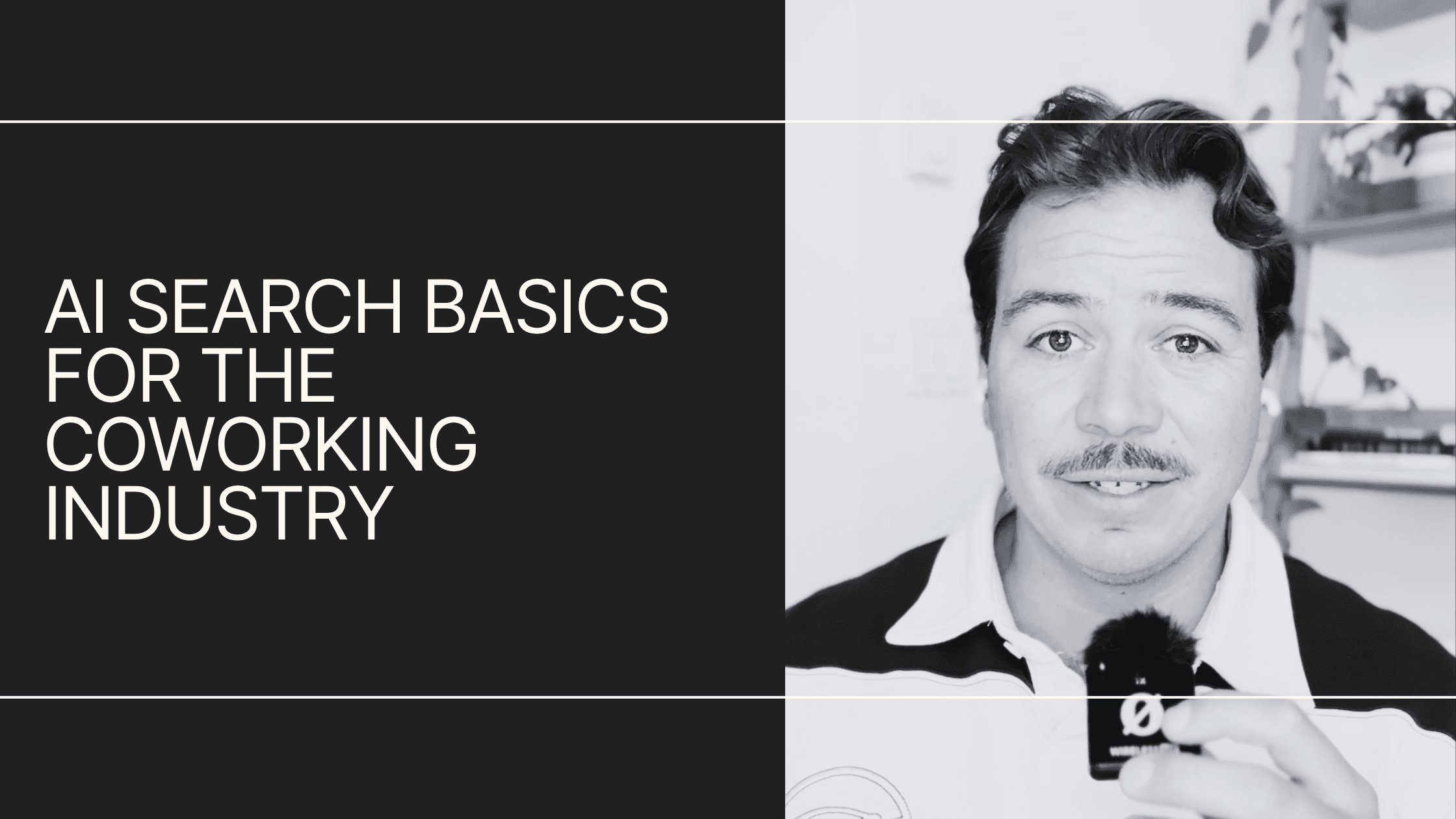
AI search is one of the most talked-about (and important) topics in marketing right now. It's also one of the murkiest.
So, let’s do a little crash course.
AI search vs SEO: start with a mindset switch
AI search goes by two acronyms:
- AEO: Answer Engine Optimization
- GEO: Generative Engine Optimization
AEO and GEO are not the same. Both pertain to AI search but target different formats and systems. But we won't go there in this article.
This is the big thing you need to keep in mind when it comes to AI search vs SEO:
With SEO, you're thinking about ranking. With AEO and GEO, you're thinking about being the obvious answer.
SEO, at its simplest, matches a page to a string. Someone types a query, and the engine serves up the pages it thinks best match it.
Au contraire, AI search assembles an answer about an entity.
It gathers information from across the internet, synthesizes it, and hands back a recommendation, including your:
- Website
- Blog
- Social channels
- Reviews
- Third-party listings
- Forum threads
And, for a little extra fun, it also pulls from a long list of sources you don't own.
So, the work required to show up for AI has moved away from being almost exclusively on your website and extended into the body of information available about your brand everywhere else.
The two systems are related, and there's crossover, but the way information gets gathered and served is different enough that it changes what you should be doing.
Before we get to the doing, there are three pieces of context worth having.
Context 1: zero click is now the default
In the first four months of 2026, 68% of US Google searches ended without a click, according to SparkToro's analysis of Similarweb clickstream data.
That's up from 60.45% in 2024, a jump of about 7.5 percentage points in two years.
Zero click means no click to anywhere, including:
- Your site
- A competitor
- A paid result
- Google's own properties like Maps or YouTube
And it happens because the searcher got what they needed and stopped.
This has been building for a decade.
SparkToro's read is that AI Mode accounted for roughly a third of one percent of searches during the study window, so the 68% is the cumulative result of Google steadily adding features that keep people on Google:
- Featured snippets
- Knowledge panels
- Local packs
- More recently, AI Overviews, which are a meaningful contributor on top of everything that came before
So, zero click is the environment AI search is arriving into, and it's a big driver behind the next point.
Context 2: traffic and visibility have come apart
In non-jargony English, "traffic and visibility have come apart" means that the traffic you see landing on your website isn't always telling the whole story these days.
And, in simpler terms...
Your analytics can show traffic declining while your commercial visibility (ie, how frequently your brand is being served to your target audience) is going up, and your lead quality might even be improving despite it.
Those two things used to move together, but they don't anymore.
The reason is that people using AI search do a substantial amount of research before they ever land on your website.
Your site stops being the first place people go to learn about you and becomes a later (or even the last) stop in the process, closer to a fact-check or point validation than a first impression.
If you're weighing success primarily against sessions/traffic, it might look like something is broken, despite the reality that it is, in fact, going pretty well.
So, it's important to understand that revisiting what you're measuring is becoming more important, and that (as I forecasted earlier this year), as influence and discovery increasingly occur outside of owned websites, it might get tougher to know exactly where ever lead came from.
Context 3: ranking in the top 10 is no longer sufficient
For a long time, the goal was to show up in the top 10 spots on Google's SERP: get your page in the top ten links, and you get the traffic.
That's still valuable, but it's no longer the whole picture.
Ahrefs analyzed roughly 863,000 keywords and four million AI Overview URLs and found about 38% of AI Overview citations came from pages ranking in Google's organic top ten.
BrightEdge, using different methodology, puts the overlap closer to 17%.
And when Ahrefs looked at the standalone assistants rather than Google's own AI Overviews, the average overlap with Google's top ten dropped to around 12% across ChatGPT, Gemini, and Copilot.
The studies disagree on the number, but they do agree on the direction.
For scale on how fast this is moving:
Ahrefs measured that same top-ten overlap at 76% in July 2025. Part of the drop to 38% reflects better detection of citations they were previously missing, and part of it reflects a change in how sources get selected.
Take the trend seriously and hold the specific figure loosely.
The point is that ranking well gets you into consideration, but it doesn't get you cited.
This is a PR problem wearing an SEO costume
Here's the piece I find most operators haven't internalized:
AI isn't only reading what you put into the world. It's reading what other people put into the world about you.
That extends to:
- Third-party mention
- Directory listings
- Local business journal roundups
- "Best coworking spaces in [city]" listicles
- Reddit threads.
- Review text and Google Business Profile specifics
- Partner websites
That's a reputation and relationships problem, and it's the thing traditional SEO tooling was never built to solve, which means your job now includes a question you may not have asked before:
What are we doing to get recognized, profiled, and mentioned by other people?
After a decade in PR agencies, I did not expect to be making this argument again in 2026, but alas. Here we are.
What you can measure now, and what you can't
On June 3, 2026, Google launched Search Generative AI performance reports in Search Console.
Igives you impressions showing how often your URLs appeared inside Google's generative AI features, broken out by page, country, device, and date.
But it doesn’t give you:
- No-click data, click-through rate, or query detail. You can see that you appeared. You can't see what it was worth.
- Historical backfill. Data starts May 18, 2026, so there's nothing to compare against yet.
- Abything beyond Google's surfaces, meaning nothing on ChatGPT, Perplexity, or Claude.
Separately, Google Analytics added an AI Assistant channel group in May 2026 that splits out referral traffic from the major assistants.
Pair the two, and you get impressions from one and sessions from the other, which is closer to a picture than either alone.
So, you have two partial views and no complete one, which is roughly where SEO measurement sat in 2005, for what it's worth.
The fundamentals are the same as they've always been, though.
You need to understand where you get named, by whom, and for which prompts.
Start by running the prompts your prospects would run.
Ask ChatGPT, Claude, and Perplexity to recommend a coworking space in your market with your characteristics, and see what comes back.
That takes an afternoon and tells you more than any dashboard will this year.
If you want to get more in-depth, there are a ton of paid tools out there that can help you with this (albeit not inexpensively).
I wrote more about how to audit that presence in this piece on controlling your narrative, so I won't repeat it here.
Your Google Business Profile is a data feed now
Another interesting point is the increased relevance of your Google Business Profile and its position as an upstream data feed for AI search.
Rather than just showing a pin on a map, it's structured, verified, frequently updated data about your business, which makes it exactly the kind of source AI systems like to lean on.
There are a few things that matter more than they used to:
- Review text, not just star rating: The words people use describe your vibe, your community, and your amenities in language AI can pull from.
- How you reply, and how fast: Canned responses read as canned. Specific, human replies give the system more to work with and tell a better story to the people reading them.
- Complete detail fields: Parking, accessibility, amenities, and the small stuff you skipped during setup.
- Real staffed hours: If your space is 24/7 by key fob but staffed nine to five, list the staffed hours. Listing 24/7 is technically true and practically misleading, and it will get you recommended to people whose expectations you can't meet.
And, for multi-location operators, this is the big one:
Locations are evaluated individually, not as a brand.
One profile for the company doesn't cover you. Every location needs its own profile, its own reviews, and its own details, or your weakest market drags on markets that are doing fine.
Where else you need to be to succeed with AI search
Beyond your own properties and your Google Business Profile, the sources that increasingly factor into AI answers include:
- Coworking aggregators and directories
- Local business journal roundups and "best of" listicles
- Reddit and other community forums where people ask for recommendations
- Partner and neighbor businesses that mention or tag you
- Any publication that's covered your market
And then, obviously, the things you own and control: website, product pages, location pages, blog, and email.
All of it needs to be current, accurate, and detailed enough that when a system goes looking, it finds the right answer instead of assembling one from fragments.
Where does this leave you?
I'm writing this in August 2026. By November, some of the specifics above will have moved, and the measurement tools almost certainly will have.
That's the nature of the topic right now.
But the structural point is stable enough to plan around:
AEO and GEO are not instead of SEO. They're in addition to it.
There's crossover between them. Good SEO fundamentals still feed AI visibility. What's changed is that your website is no longer where the work ends, and the top ten is no longer where the goal stops.
There's one other thing to sit with: when a lead reaches you from AI search, they've already done a pile of research. And even when a lead comes through your website, it's reasonable to assume they've read about you, compared you, and formed a view on your pricing using AI before you ever hear from them.
That's an opportunity if the information out there is accurate and compelling. It means people are likely to arrive even better qualified and closer to being ready to sign up.
Likewise, it's a liability if it isn't, because they've probably made most of their decision before you got a say.